
E Commerce Marketing: A Practical Guide for Small Businesses
Simple online marketing strategies to attract customers, build trust, and increase online sales
Introduction
Selling products online is easy to start, but getting consistent customers is a different challenge. This is where E Commerce marketing becomes important. It helps a business reach potential buyers, explain the value of its products, build trust, and encourage people to make a purchase.
For a small business owner, marketing does not always require a large advertising budget. A combination of useful social media content, SEO, good product pages, customer reviews, and regular communication can create a strong online presence.
For example, a small clothing store can use Instagram to showcase new products, publish styling ideas, collect customer reviews, and guide interested visitors toward its online store. Each activity supports a different part of the buying journey.
.
Table of Contents
What Is E Commerce Marketing?
What Do SEO Services Include?
E Commerce marketing is the process of promoting an online store and its products through digital channels. The purpose is not simply to bring visitors to a website. A good strategy should help visitors understand the product, trust the business, and complete a purchase.
Common channels include:
- Search engine optimization
- Social media marketing
- Content marketing
- Email marketing
- Paid advertising
- Influencer marketing
- Customer reviews
- Retargeting
The customer journey can be understood through five simple stages:
| Stage | Purpose | Example |
|---|
| Awareness | Introduce the business | Instagram Reel |
| Interest | Provide useful information | Product guide |
| Consideration | Build confidence | Customer reviews |
| Purchase | Encourage conversion | Clear product page |
| Retention | Encourage repeat sales | Email offers |
Why E Commerce Marketing Matters for Small Businesses
Small businesses often compete with companies that have much larger budgets. However, a smaller business can stand out by understanding a specific audience and communicating with them clearly.
Effective E Commerce marketing can help you:
- Reach people who are interested in your products
- Increase relevant website traffic
- Generate product enquiries
- Build customer confidence
- Increase repeat purchases
- Understand customer preferences
Consider a local handmade jewellery business. Instead of posting only product photographs, it could create short videos explaining how the jewellery is made, show different ways to style it, and share genuine customer experiences.
This type of content gives potential buyers more reasons to trust the business.
Best Online Marketing Channels
Social Media Marketing
Social media is useful for showing products in real situations. Instagram, Facebook and similar platforms can help businesses communicate with potential customers before they visit the website.
Useful content ideas include:
- Product demonstrations
- Customer reviews
- Behind the scenes videos
- Frequently asked questions
- Styling or usage ideas
- New product announcements
Do not make every post a direct sales message. Educational and useful content can keep people interested even when they are not ready to buy.
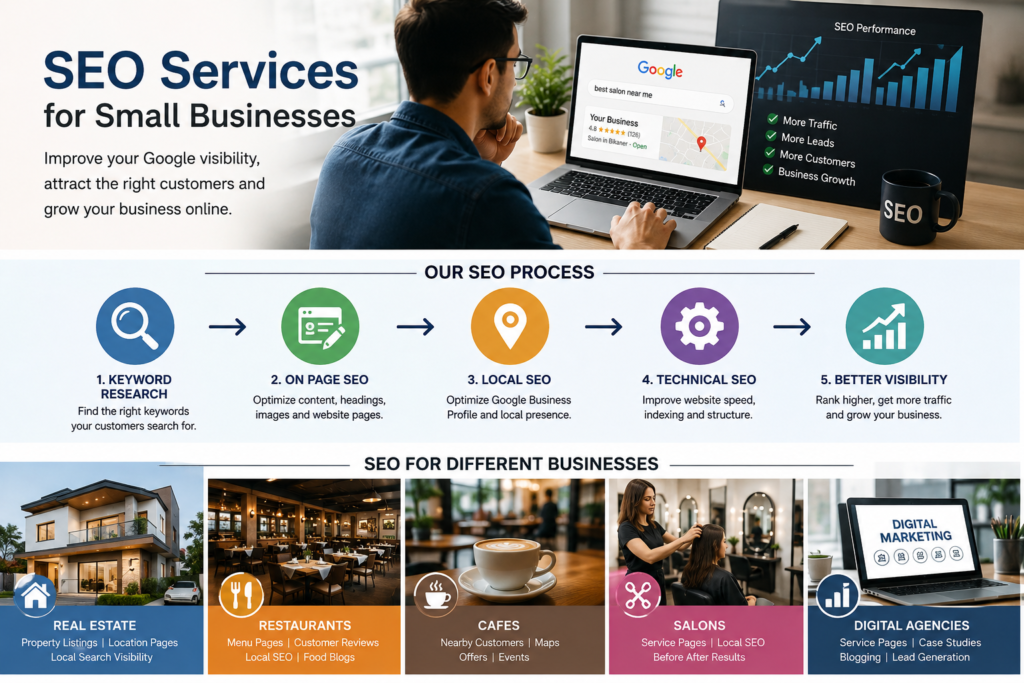
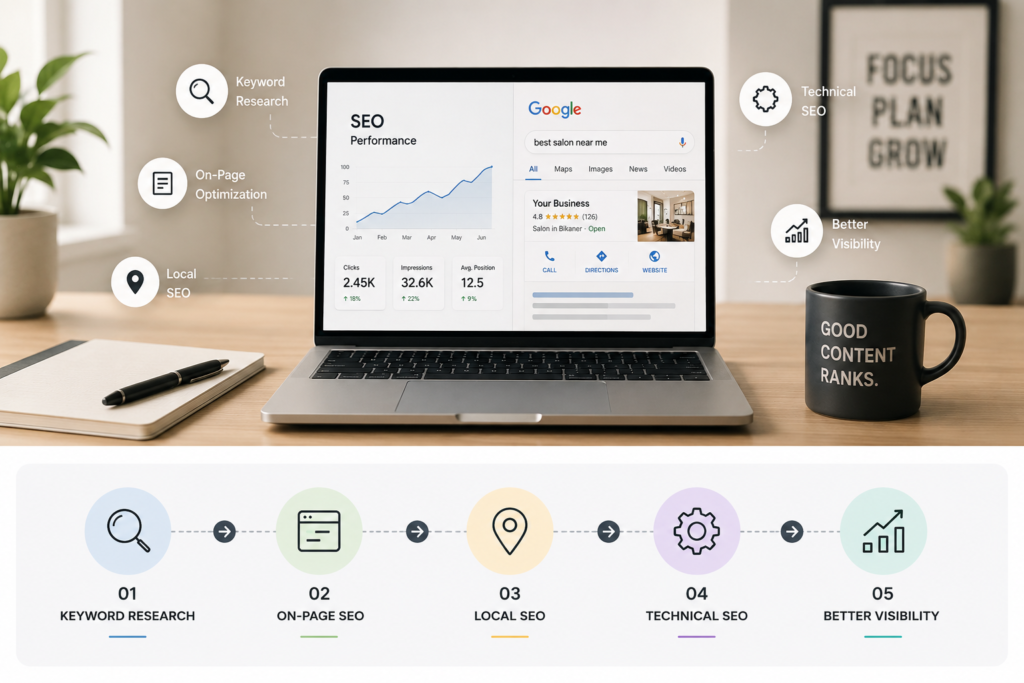
SEO for E Commerce Websites
SEO helps an online store appear when people search for relevant products or information.
A strong E Commerce marketing plan should pay attention to:
- Product titles
- Product descriptions
- Category pages
- Search intent
- Internal linking
- Image optimization
- Website speed
- Mobile usability
For example, a store selling bags may create a detailed guide about choosing a suitable laptop bag instead of targeting only the broad term “bags”. More specific content can attract visitors with a clearer buying intention.
Content Marketing
Content gives customers useful information before they make a decision.
You can create:
- Buying guides
- Product comparisons
- How to use articles
- Frequently asked questions
- Product care guides
- Educational blog posts
Content should answer genuine customer questions rather than exist only to include keyword.
How to Create an E Commerce Marketing Strategy
A practical E Commerce marketing strategy can be built in a few steps.
1. Understand Your Audience
Before creating content or advertisements, identify who is most likely to buy.
Consider:
- Age
- Location
- Budget
- Interests
- Common problems
- Buying habits
- Preferred social platforms
2. Improve Product Pages
Your product page should answer the questions a customer has before buying.
Include:
- Clear product photographs
- Important features
- Practical benefits
- Price
- Delivery information
- Return details
- Customer reviews
- Clear purchase options
3. Create Consistent Content
Choose a realistic posting schedule. A small business does not need to publish several times every day. Consistency and relevance matter more.
4. Track Your Results
Measure traffic, conversion rate, sales, average order value and repeat purchases.
These numbers help you identify which parts of your E Commerce marketing strategy are actually contributing to business growth.
Common E Commerce Marketing Mistakes
Even a well designed online store can struggle when the marketing process is poorly planned.
Avoid these mistakes:
- Targeting everyone instead of a specific audience
- Copying competitors without understanding your own customers
- Using keywords unnaturally
- Ignoring customer reviews
- Making product information difficult to find
- Running advertisements without tracking results
- Depending completely on one social media platform
- Focusing only on attracting new customers
One common problem is bringing thousands of visitors to a website without improving the product page. Traffic alone does not guarantee sales.
Practical Tips for Better Results
If you have a limited budget, start with the basics before increasing advertising spending.
- Optimize your most important product pages.
- Create useful social media content.
- Collect genuine customer reviews.
- Answer common customer questions through content.
- Improve mobile website usability.
- Track where your customers come from.
- Test different product images and descriptions.
- Build an email list for repeat communication.
A useful approach is to improve one part of the customer journey at a time. Better product information can improve conversions before you spend more money on acquiring visitors.
Frequently Asked Question?
Conclusion
Successful E Commerce marketing is not about being active on every platform. It is about understanding your customers and making the buying journey simple.
Start with a clear audience, useful content, well optimized product pages and genuine customer reviews. Once the foundation is strong, you can gradually test paid advertising, email campaigns and other online marketing methods.
The most useful strategy is one that you can consistently manage, measure and improve.
