
AI in Digital Marketing: A Practical Guide for Small Businesses and Students
Learn how artificial intelligence can support SEO, content, social media, customer research and everyday marketing without replacing human creativity.
Introduction
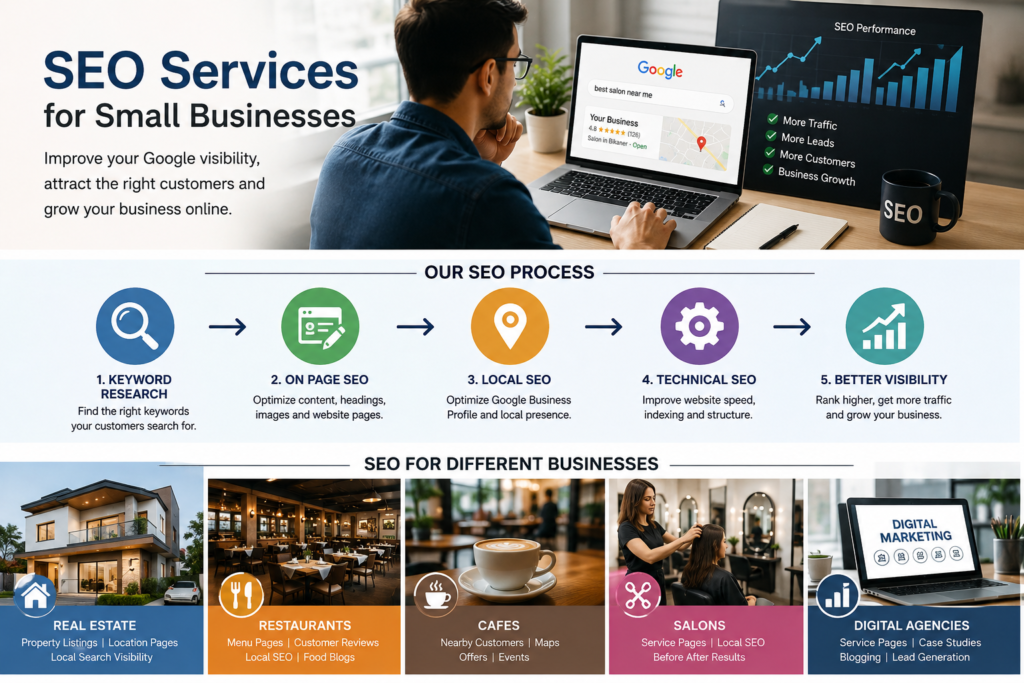
Digital marketing has become easier to plan and manage with the help of artificial intelligence. From finding content ideas to understanding customer behaviour, AI can reduce repetitive work and help marketers make better decisions.
For a small business owner, this can mean creating a useful marketing plan without spending hours on every task. For an AI student, it can be a practical way to understand how technology is being used in real marketing situations.
The important point is that AI should support marketing decisions, not blindly make them. Human judgement, brand understanding and customer experience still matter.
Table of Contents
What Is AI in Digital Marketing?
Small businesses often have limited time and marketing resources. AI can make everyday work more manageable.
Some useful applications include:
• Generating initial content ideas
• Organising keyword research
• Creating social media content outlines
• Summarising customer feedback
• Preparing email ideas
• Analysing basic campaign data
• Creating frequently asked questions
• Finding possible content gaps
However, generated content should always be reviewed. A local business needs genuine experience and specific information that generic AI output may not know.
Digital Marketing with AI: Key Uses
| Area | AI Helps With |
|---|
| SEO | Keyword ideas, content gaps, search intent |
| Content | Blog ideas, outlines, content drafts |
| Social Media | Post ideas, captions, content planning |
| Customer Research | Customer questions, feedback, audience insights |
| Email Marketing | Subject lines, email ideas, basic personalisation |
| Analytics | Data summaries, trends and performance insights |
A Practical Example
Imagine a small bakery wants more customers from its local area.
Instead of asking AI to write hundreds of generic articles, the owner can use it to organise common customer questions such as birthday cake options, custom orders, delivery areas and advance booking.
The owner can then add real details about pricing, preparation time, ingredients and customer experiences.
This creates content that is more useful because AI assists with the process while real business knowledge provides the substance.
Common Mistakes to Avoid
AI can save time, but poor usage can also create weak marketing.
Avoid these mistakes:
• Publishing AI generated content without checking facts
• Creating large amounts of similar content
• Ignoring local customer language
• Using keywords unnaturally
• Depending completely on AI for marketing strategy
• Copying competitors and asking AI to rewrite their content
Quality matters more than volume. A smaller number of genuinely helpful pages can be more valuable than publishing content simply to increase website size.
Best Practices for Using AI
A practical approach is to follow three simple steps.
First, give AI a clear purpose. Tell it whether you need research, an outline, ideas or analysis.
Second, add your own information. Business experience, customer questions, location and services make the output more relevant.
Third, review everything before publishing. Check facts, tone, originality, search intent and usefulness.
This approach keeps the human element at the centre of digital marketing.
Frequently asked question?
Can AI replace digital marketers?
No. AI can automate repetitive tasks, but strategy, creativity, communication, and business judgment still need human involvement.
How can small businesses use AI for marketing?
Small businesses can use AI for content planning, keyword research, customer feedback analysis, social media ideas, and basic marketing reports.
Is AI generated content good for SEO?
AI generated content can support SEO when it is accurate, original, useful, and properly reviewed by a human.
Is digital marketing with AI difficult to learn?
No. Beginners can start with simple tasks such as keyword research, content planning, and social media ideas before learning advanced AI marketing techniques.
Which marketing tasks should remain human?
Final strategy, fact checking, customer communication, brand decisions, and content quality checks should remain under human control.
Conclusion
AI in digital marketing is most useful when it makes marketing work more efficient without removing human judgement. Small businesses can use it to organise ideas, understand customers and reduce repetitive work. Students can use the same tools to develop practical marketing skills.
The strongest approach is not AI instead of people. It is people using AI thoughtfully.
